
‘We hear a lot about polymers, but what are they in the end? Aren’t they the same as resins or plastics?’
We have written an article explaining polymers for those who have such questions.
In this article, SUGA—a company that sells products such as sputtering systems capable of atomic-level control—will provide an easy-to-understand explanation of polymers.
We also discuss the differences between ‘polymers’, ‘resins’ and ‘plastics’, which are often confused.
A polymer is a substance formed when a large number of small molecules are linked together in a regular, repeating pattern, resulting in a high molecular weight.
Polymer has a high molecular weight and consists of regular, repeating structural units.
It is difficult to understand in words, so let’s illustrate.
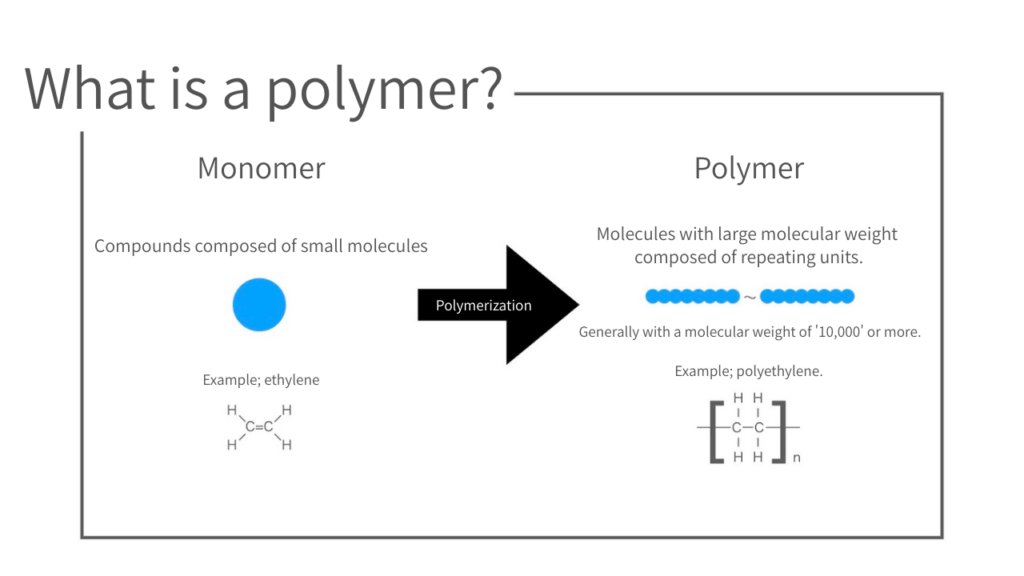
As an aside, low-molecular-weight compounds with small molecular weight are called ‘monomers’, while those that are not made up of repeating units and have a large molecular weight are called ‘macromolecules’.
Differences between polymers, resins and plastics
Often confused ‘polymer’, ‘resin’ and ‘plastic’.
The differences are roughly as follows
Polymer
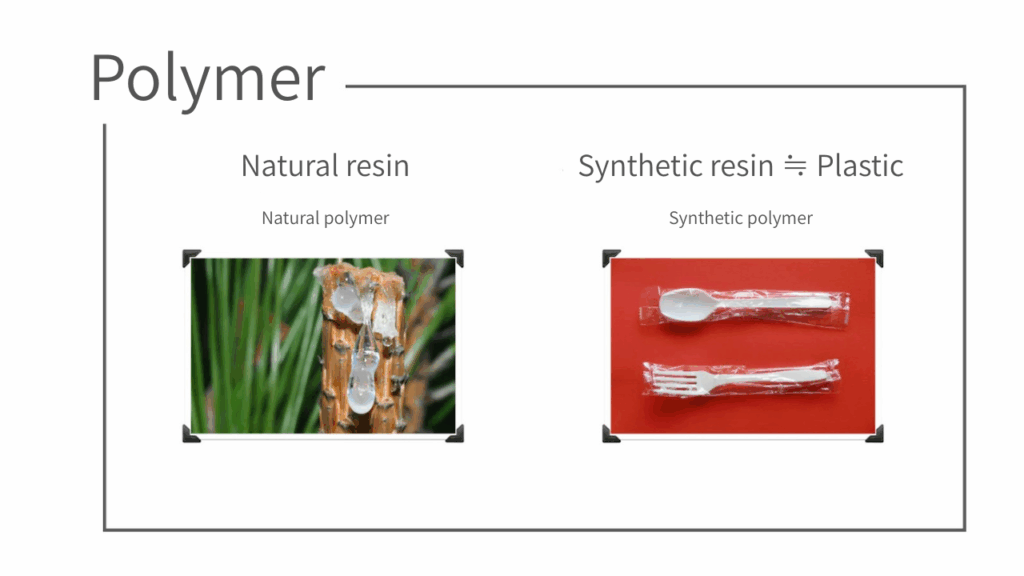
As discussed at the beginning of this section, these are large molecules composed of repeating units.
It can be roughly divided into the following categories
・Natural resins (natural polymers): natural resins taken from sap or animals.
・Synthetic resins (synthetic polymers): man-made resins, including plastics.
It should be noted that natural resins are also polymers, although they are often used industrially as polymers ≈ synthetic resins.
Resin
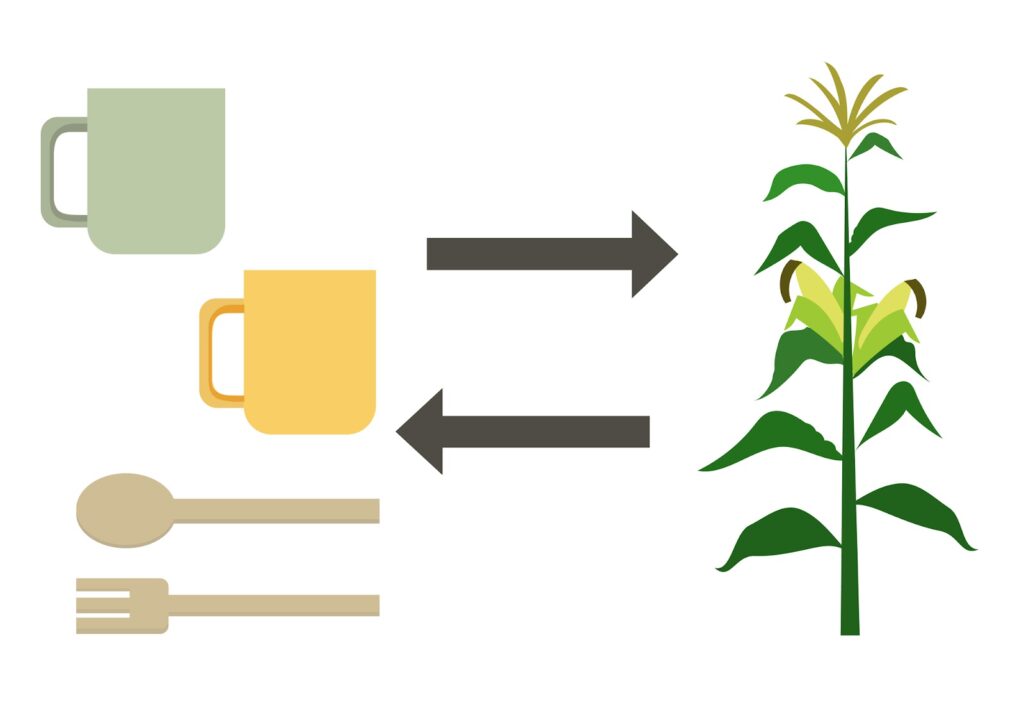
Resin originally referred to a hardened natural sap.
More recently, however, man-made ‘synthetics’ have been created, and synthetic resins are sometimes referred to as ‘resins’ for short.
Although the term “resin” originally encompasses natural materials as well, under Japanese standards (JIS), it is defined as “a raw material for plastics,” so it is primarily used to refer to synthetic materials.
Plastic
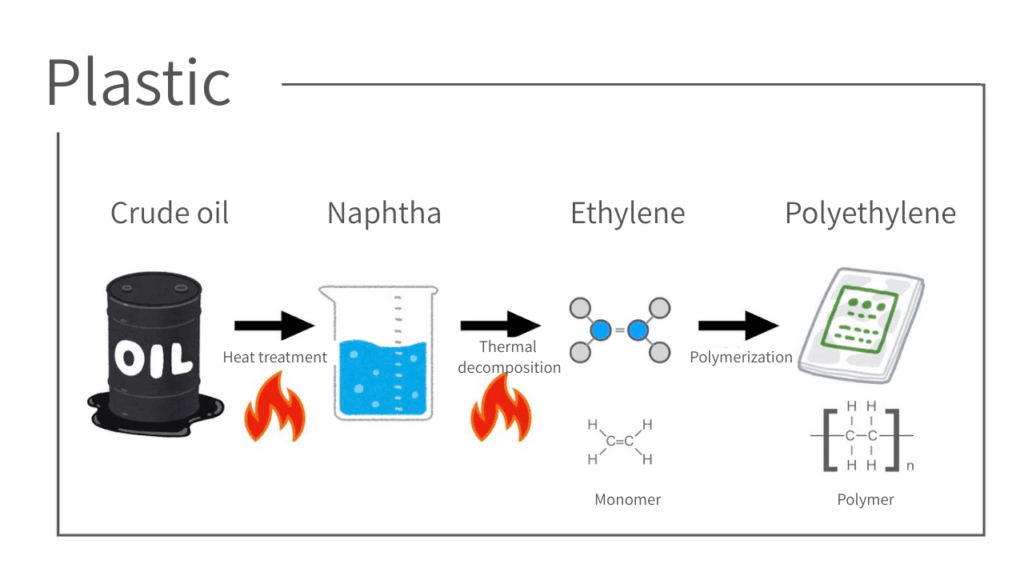
Plastic refers to molded products made from resin, which is produced by adding polymers. Generally, the term “synthetic resin” is often used to refer to “plastic.”
JIS (Japan Industrial Planning) terminology is defined as follows.
A material that contains a high polymer as an essential constituent and that can be given shape by flow at certain stages of processing into a finished product.
Reference (in Japanese): JISK6900:1994 Plastics – Terminology.
So, the JIS definition includes ‘polymers’ and anything that can ‘change shape’ is a ‘plastic’.
Examples of how polymers are used in society.
Here are some examples of how polymers are used in society.
It is surprisingly familiar and should be known as trivia.
Superabsorbent polymers: e.g. disposable diapers

Superabsorbent polymers are used in disposable nappies and other products.
Superabsorbent polymers are synthetic polymers that instantly absorb and swell on contact with water, turning the whole water into a gel.
Specific examples are used in ‘disposable diapers’, ‘cold packs’ and ‘disaster toilet cubicles’.
Nylon: clothing, etc.

Nylon, used in clothing and bags, is a type of synthetic polymer.
It is made from petroleum and is one of the most man-made fibers.
It has become an indispensable material for clothing as it is strong, quick-drying and highly elastic.
Polyethylene: e.g. plastic bags
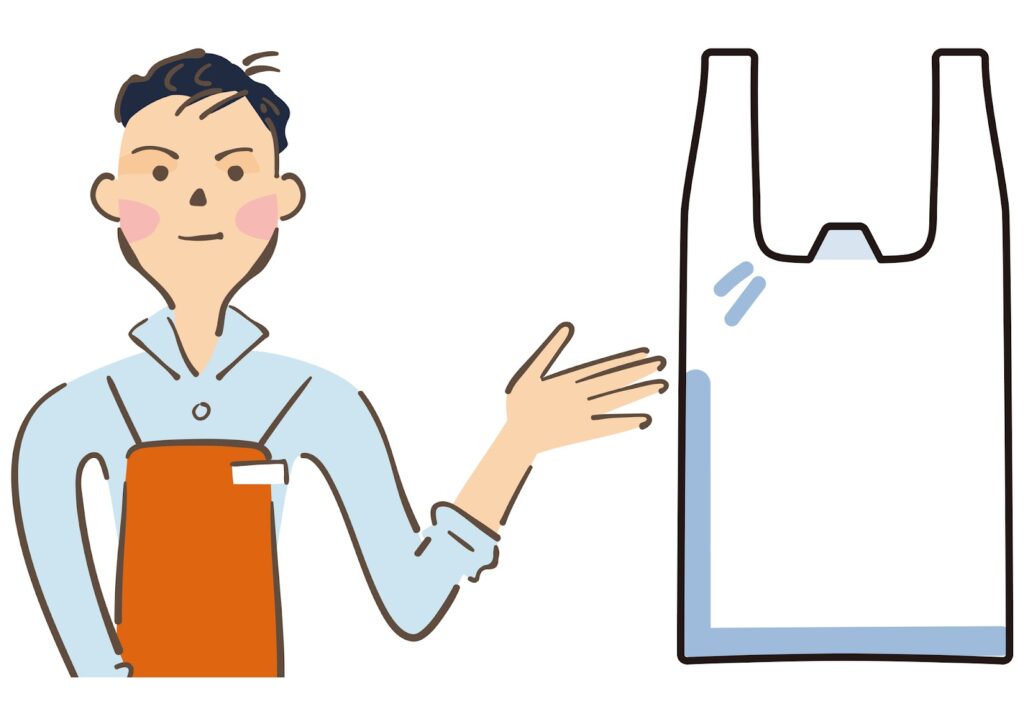
Bags made of polyethylene, such as plastic bags from supermarkets are another type of polymer.
Naphtha, which is produced by heating crude oil, is thermally decomposed to extract ethylene, which is mixed with a catalyst and chemically reacted at high temperatures and pressures to produce polyethylene.
Rubber: rubber for tires of heavy vehicles

Natural rubber is another natural polymer (natural macromolecule).
Natural rubber is made by coagulating the rubber component in the latex from the ‘para rubber tree’.
They are characterized by their high strength and are used for tires on heavy vehicles (buses and trucks), which are particularly heavy to bear.
Synthetic rubber is a type of synthetic polymer and is sometimes used in passenger car tires.
As a further aside, other natural polymers include ‘proteins’ and ‘starches’.
Summary
This article introduced polymers and how they differ from resins and plastics and what they are used for in society.
Let’s look back at the key points.
・Polymers have large molecular weight composed of repeating units (a type of state).
・Resin is considered a raw material for plastics according to JIS standards.
・Plastics are molded products made from ‘resins’ to which ‘polymers’ are added, and are also commonly called ‘synthetic resins’.
・Polymers are used in society in ‘disposable diapers’, clothing, plastic bags and rubber for large vehicle tires.
If you have any problems with research using Polymers, we may be able to help you. Please feel free to contact us.