We have released our latest video on the official Suga Seisakusho YouTube channel!
Following our previous video, “Coating a Cutter Blade with Titanium Nitride Using Suga Seisakusho’s Sputtering System”, this video takes a closer look at how titanium nitride (TiN) is formed through reactive sputtering.
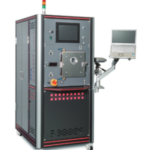
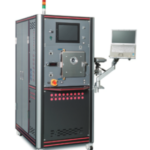
Using Suga Seisakusho’s Cubic Sputtering System “SSP1000” as an example, we explain how nitrogen (N₂) is introduced into the argon (Ar) sputtering process, allowing titanium and nitrogen to react and form a titanium nitride thin film.
The video also explains the three types of bonding found in titanium nitride—ionic, covalent, and metallic bonding—as well as “target poisoning,” which can occur when too much nitrogen is introduced. The properties of TiN, including its hardness, heat resistance, and characteristic gold-colored appearance, are also explained from a chemical perspective.
[Key Highlights]
・How reactive sputtering works using the SSP1000 as an example
・How nitrogen is activated in the plasma
・How titanium and nitrogen form titanium nitride (TiN)
・The three types of bonding found in titanium nitride and their characteristics
・Target poisoning caused by excessive nitrogen supply
・The importance of controlling the gas balance for stable deposition
In reactive sputtering, properly controlling the flow of reactive gas is an important factor in achieving stable and consistent thin-film deposition.
When viewed together with our previous video on titanium nitride coating of a cutter blade, this video provides a deeper understanding of both the actual coating process and the reactive sputtering mechanism behind it.
If you are interested in sputtering, reactive sputtering, or nitride thin films, be sure to check out the video!
▼Watch the video here