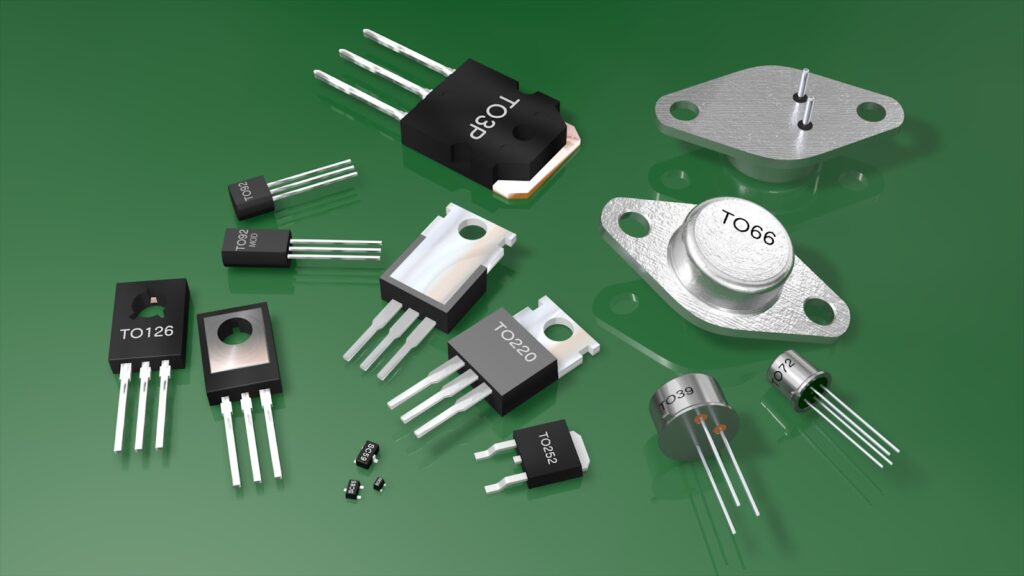
The ‘transistor’ is famous by name, but do you know what it is actually used for?
In fact, it is an item that has revolutionized the electronics world.
This article focuses on such transistors, explaining types and what they are used for!
We’ve tried to give you a simple terms explanation and hope it helps you if you’re wondering what a transistor looks like.
Transistors are useful items with two functions.
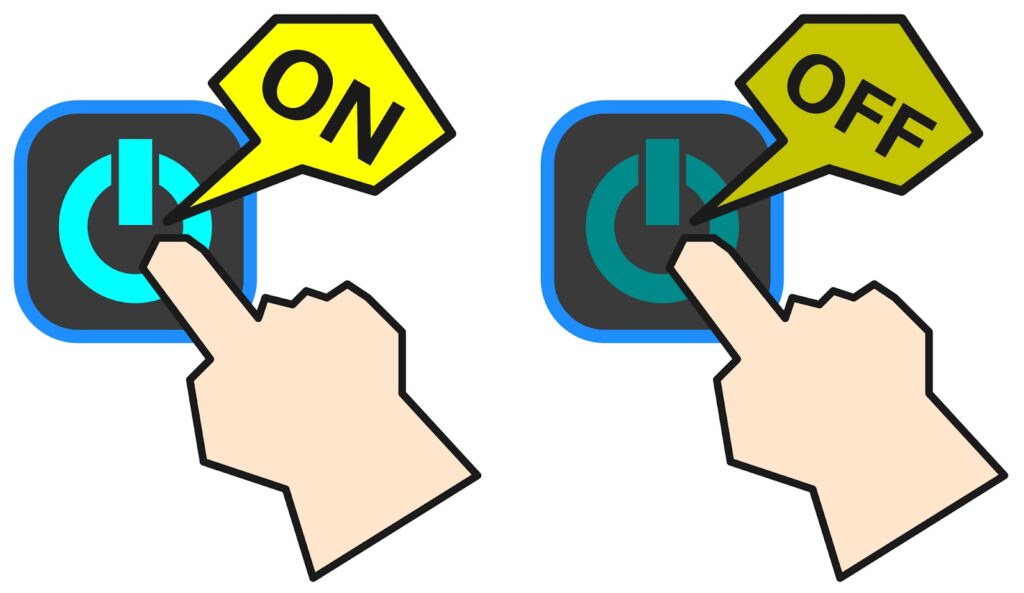
Transistors have two main functions.
Switching the circuit on and off (acting as a switch)
Amplify the signal
They are characterized by their extremely small size and are used in many electronic components due to their high heat resistance temperatures, which is a result of the use of silicon.
Transistors, in general, refer to ‘bipolar transistors’, but recently ‘unipolar transistors’ have become increasingly popular.
The next section looks at this in more detail!
Type of transistor
Transistors are divided into several types.
Let’s discuss the three most commonly used types.
The three most commonly used transistors are
・Bipolar transistor
・Unipolar transistor
・Photo transistor
Bipolar transistor
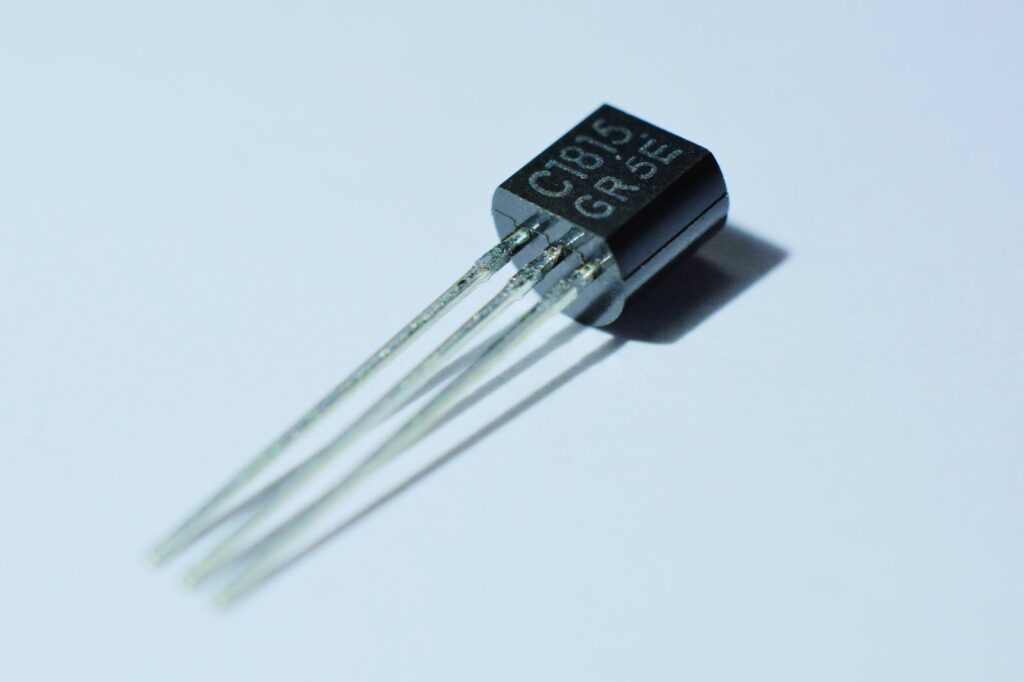
A transistor that extracts a change in ‘voltage’ through a change in ‘current’.
Characterized by easy gain, these transistors have a high amplification factor.
It is also useful by its high noise characteristics and user friendly performance even under high frequencies.
The name is derived from the Latin words bai, meaning ‘two’ + polar, meaning polarity, combining to form ‘bipolar’.
As the name suggests, they are called bipolar transistors because they have two carrier waves, an electron and a hole.
Bipolar transistors are also classified as ‘NPN-type’ and ‘PNP-type’.
●Meaning of each pin.
Bipolar transistors have three pins.
・Emitter
・Base
・Collector
These three types are often likened to
・Emitter: piping
・Base: water tap
・Collector: tap
The amount of water flowing from the tap is regulated by turning the tap.
The same is done with transistors, where the current is controlled by the ‘input signal to the base’ and the ‘amount of current flowing to the collector’ is regulated, and so on.
Unipolar transistor
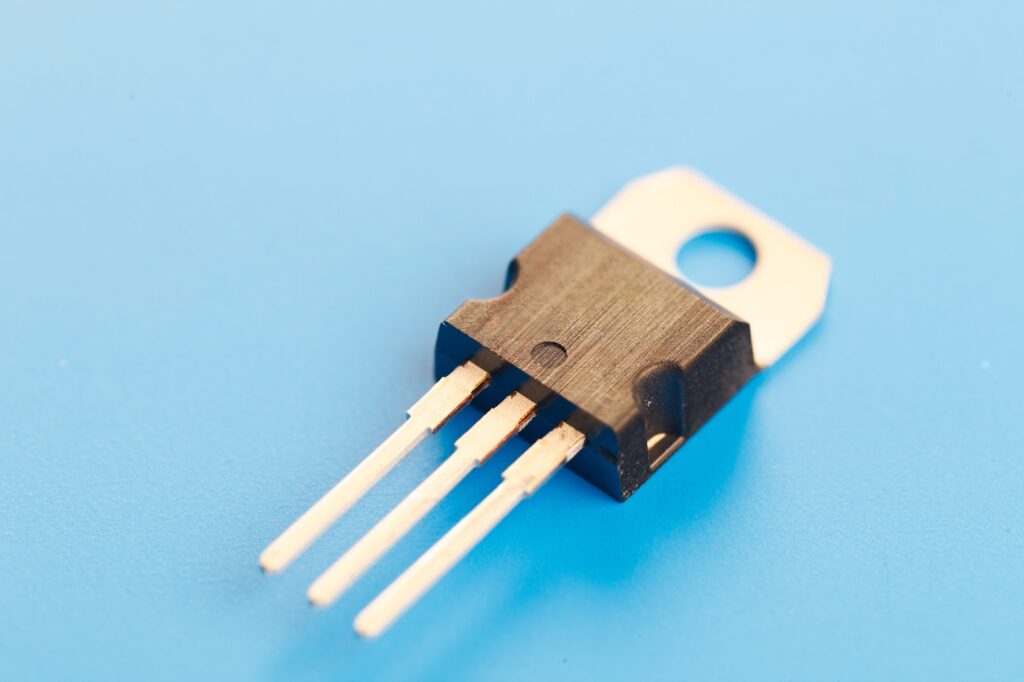
A transistor that extracts a change in ‘current’ by a change in ‘voltage’.
They feature lower power consumption than bipolar transistors.
The fast switching speed also makes the transistor suitable for compact and lightweight applications.
The name here is derived from the Latin word uni, which means ‘one’.
Unlike bipolar transistors, unipolar transistors handle only one type of transistor, either electrons or holes, hence the name.
Unipolar transistors are also known as field-effect transistors, also known as ‘FETs’.
●Meaning of each pin.
The three pins of unipolar transistors have different references to those of bipolar transistors.
・Source
・Gate
・Drain
There are also two types of unipolar transistors: ‘MOS-type’ and ‘junction-type’, each classified as P-type or N-type.
Photo transistor
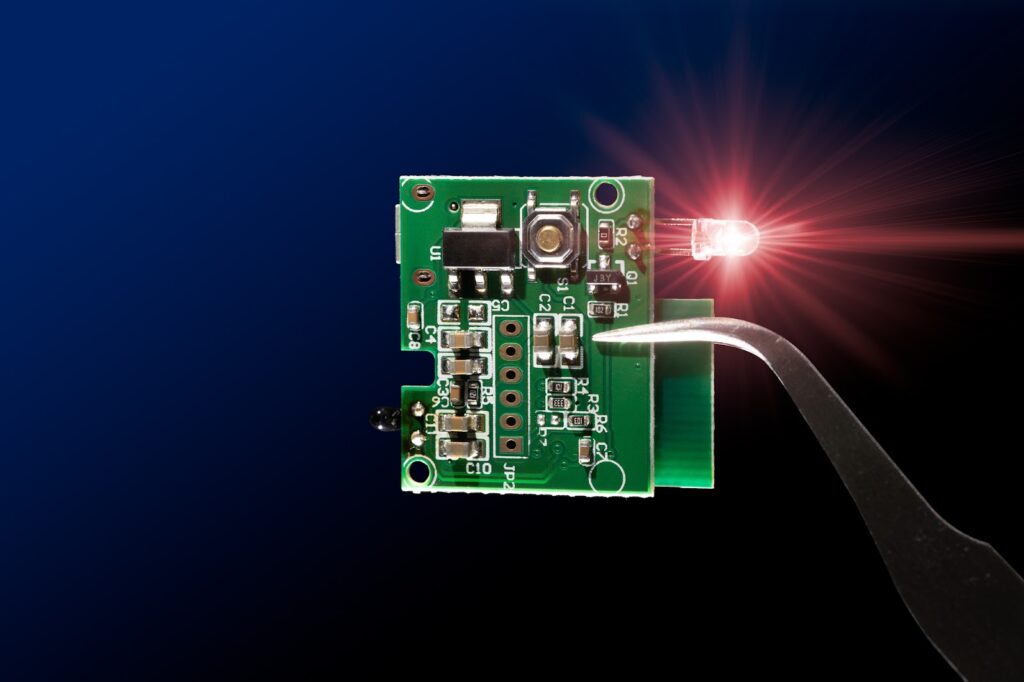
Transistor that controls the ‘current’ by means of an ‘optical signal’
The name is a combination of photon and ‘photon’, light particle.
As the name suggests, they are often used in products that receive optical signals, especially in ‘infrared’ receivers.
For example, ‘remote control receivers’, ‘optical communications’, etc.
Some automatic doors also use phototransistors.
Transistors are also used in many other situations in society.
Let’s look at them one by one.
How transistor is used in society
Transistors are used in surprisingly familiar places.
Specifically, ‘radios’, ‘electronic components’ and ‘parts of trains’.
Let’s explain them one by one.
Radio
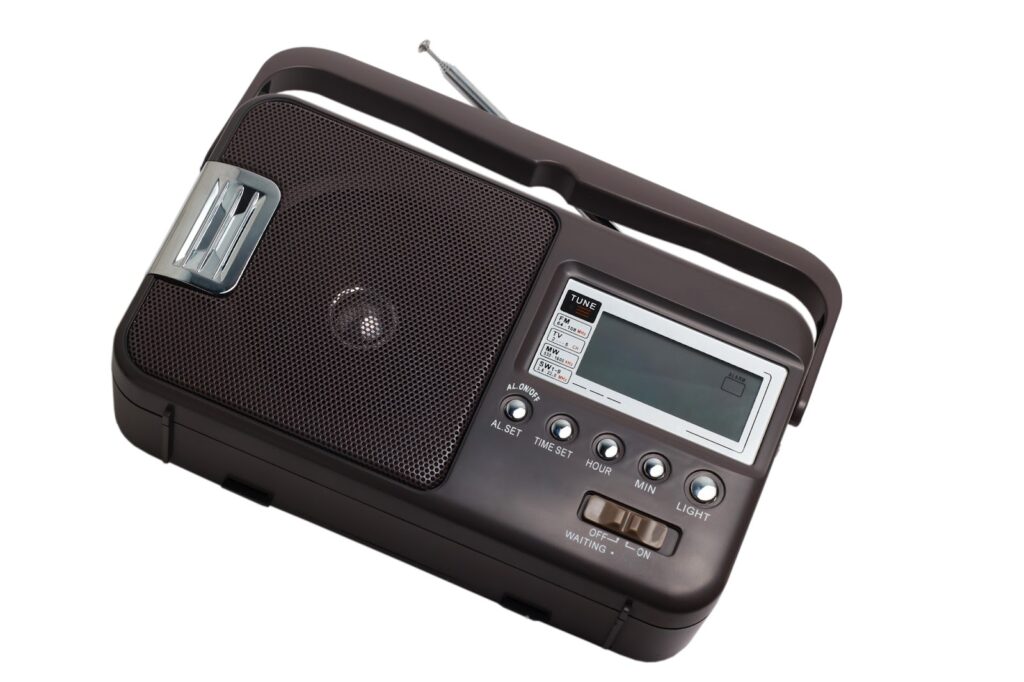
Transistors play an important role in radio.
Weak radio waves transmitted through the air are amplified and played at a level that people can hear through a loudspeaker.
They’re used in radios because of their ability to ‘amplify signals.’
Electronic components such as CPUs and memory
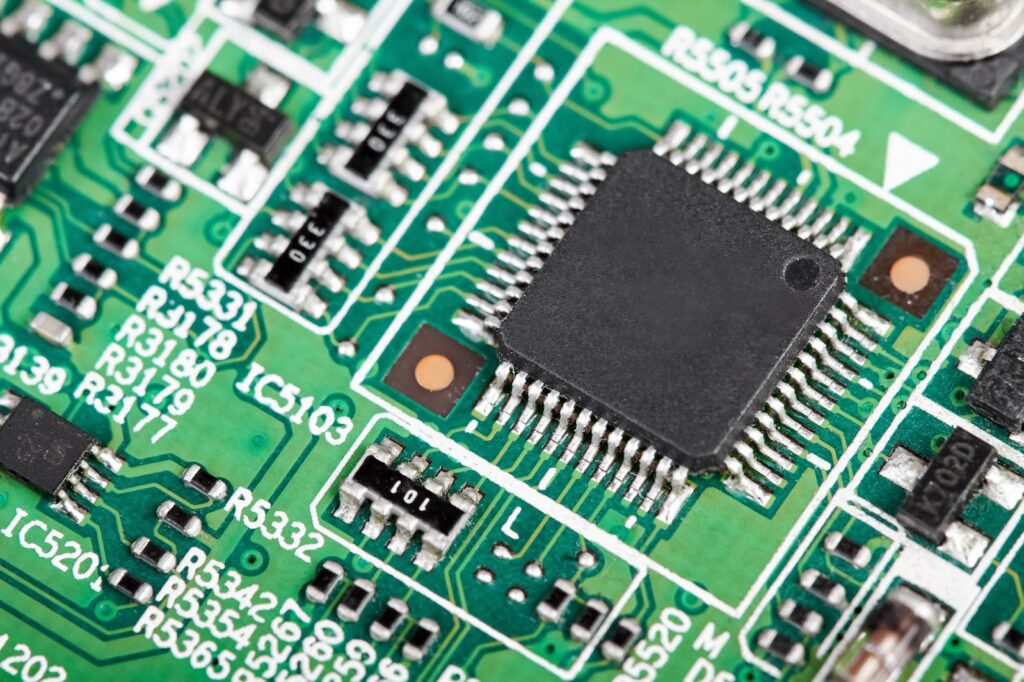
Transistors are also used in many electronic components.
Specifically, it is used when ‘amplifying electrical signals’ and as a ‘switch’, and is also useful when converting alternating current from semiconductor chips or power supplies into direct current.
They are used not only in computers, but also in your smartphone.
Component of a train
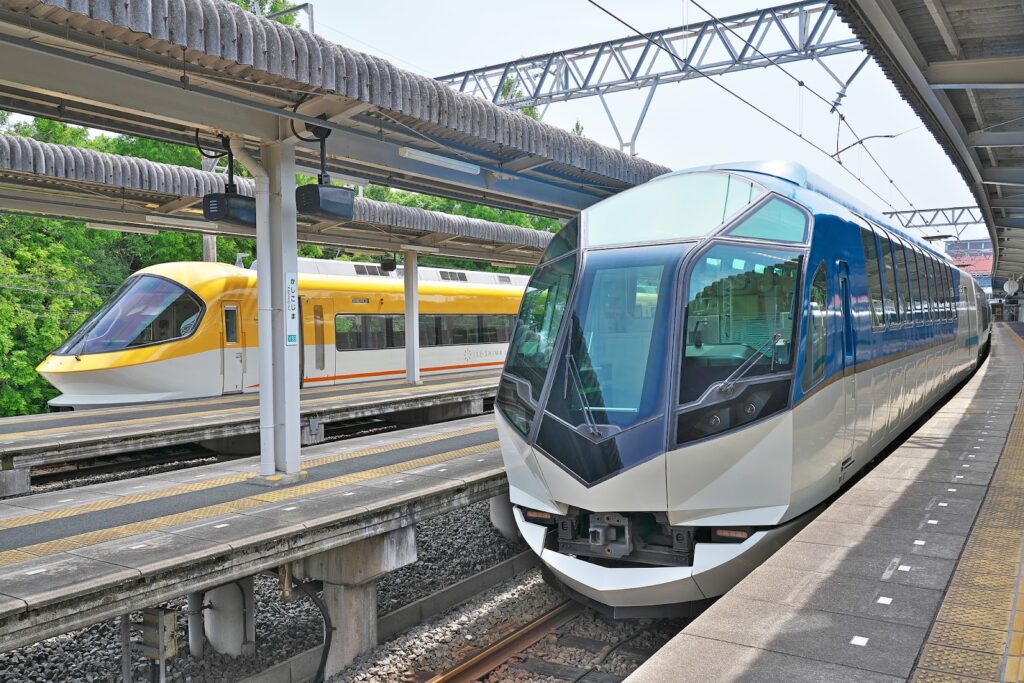
Since the mid-1990s, transistors have also been used in inverters for train vehicle drives.
And more recently, they have been used in circuit systems for driving railway vehicles, combining silicon carbide (SiC) with field-effect transistors and other components.
Although this is a very useful transistor, there are some precautions to be taken when using it.
We will talk about this in the next section.
Points to note when using.
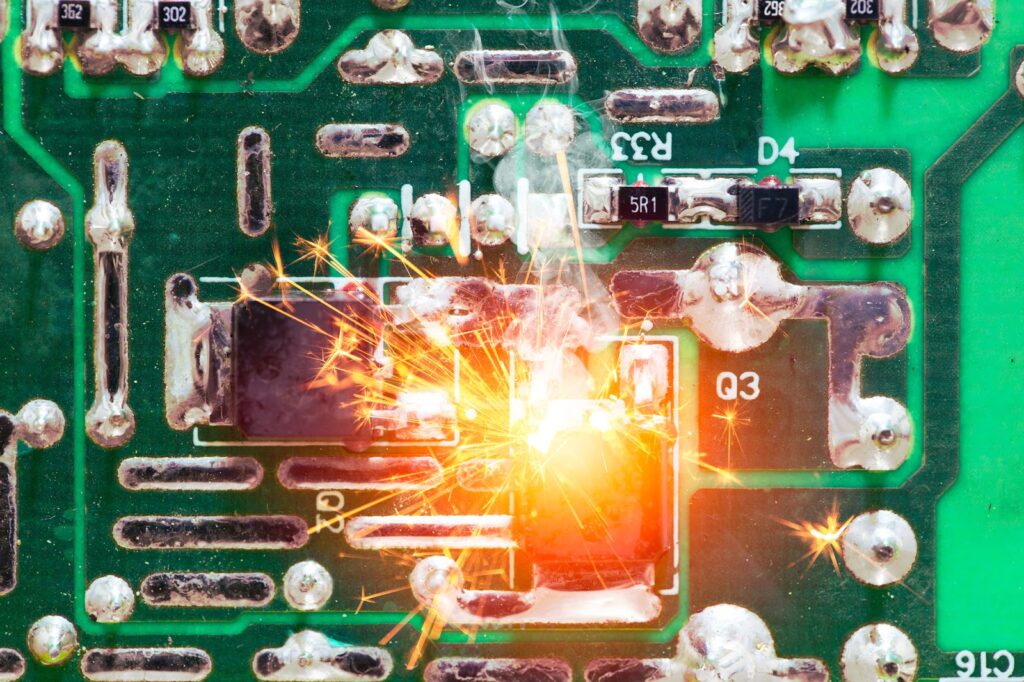
Always check the specifications in the ‘data sheet’ before use.
The part number is often written on the plastic part of the transistor.
From that part number, you can find the ‘data sheet’ issued by the manufacturer.
History of transistor
The transistor was invented in 1948 at the Bell Telephone Laboratories in the USA.
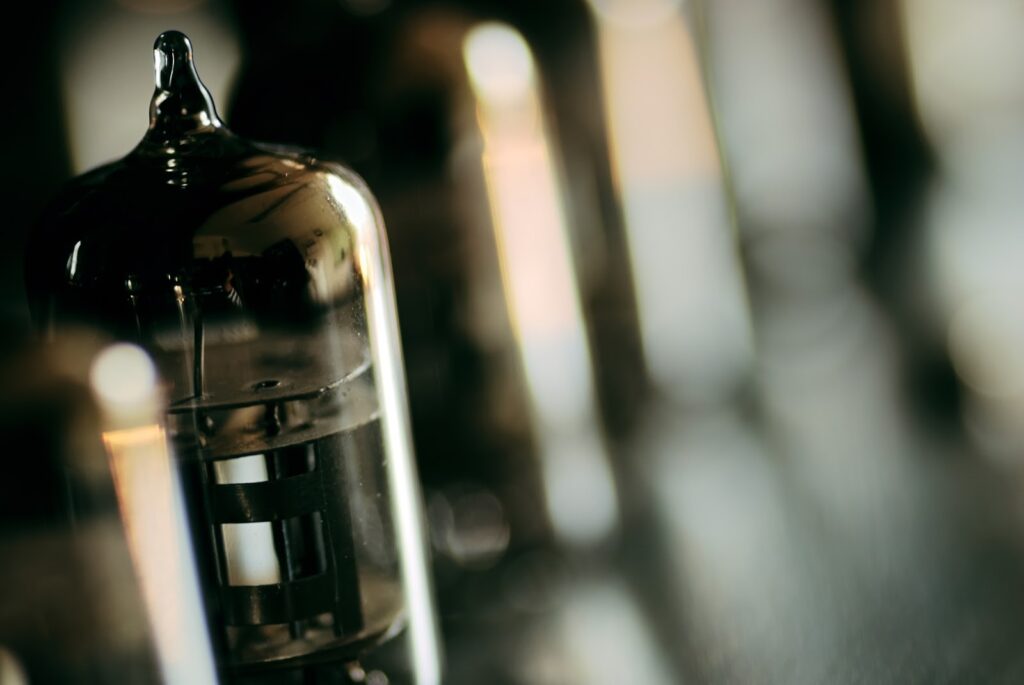
Before the invention of the transistor, ‘vacuum tubes’ were mainly used in electronic equipment.
Vacuum tubes are usually large, which was one of the reasons why products could not be made smaller.
It was at this time that the ‘transistor’ was invented and many electronic devices were miniaturized.
The three people involved in the invention were awarded the Nobel Prize in Physics.
Summary
In this article we explained about transistor
The key points of this article are as follows.
・Transistors are useful items with two functions: ‘switching’ and ‘signal amplification’.
・Transistors are broadly divided into ‘bipolar’, ‘unipolar’ and ‘photo’.
・In society, they are used in ‘radios’, ‘electronic components’, ‘parts of trains’, etc.
・Transistors have made many electronic products smaller.
If you have any problems related to ‘transistors’, we may be able to help you. Please feel free to contact us.