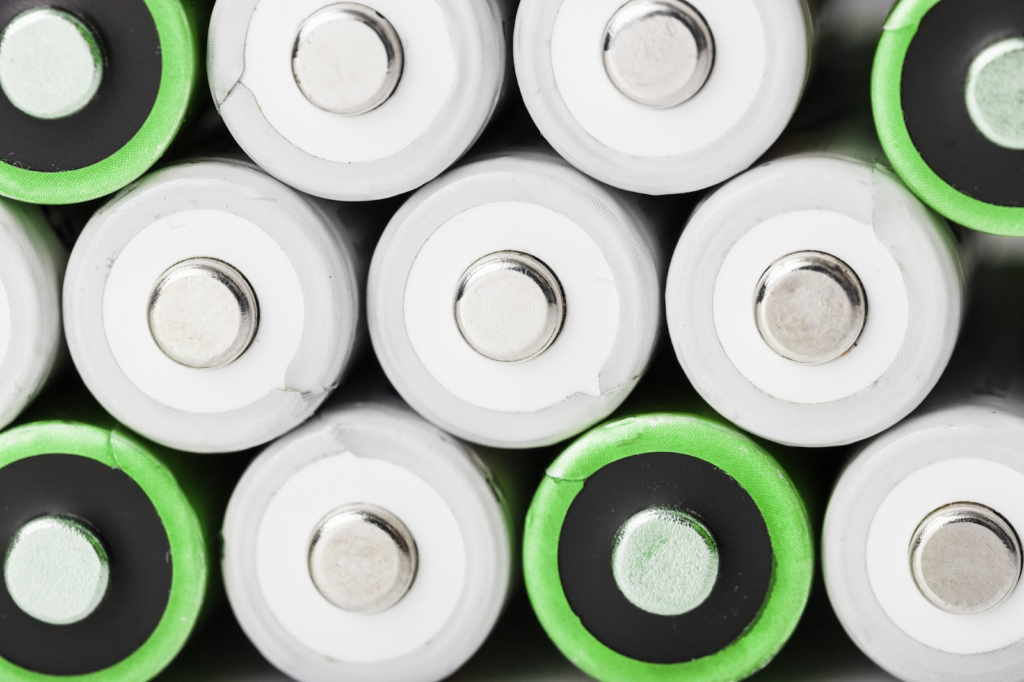
What kind of battery comes to mind when you hear the word ‘battery’?
Different people have imagined different types of batteries, such as lithium-ion batteries, which have recently been used in electric vehicles, and alkaline batteries, which are often seen as AA batteries.
The word ‘primary battery’ is used as a generic term for a variety of batteries, but perhaps few people have heard of it.
This article therefore explains what a primary battery is.
We hope that you will read this article to the end, as it will explain how to use the various primary and secondary batteries and how to distinguish them from each other.
Let’s take a look.
What is a primary battery?
Primary batteries are used-up batteries that cannot be recharged and reused once used up.
A type of battery that produces electricity from a chemical reaction called a ‘chemical battery’, of which alkaline dry cell and silver oxide batteries are well known.
It produces electricity from a reaction that occurs within the battery, so it can continue to extract electricity as long as the reaction proceeds.
However, they cannot be used again when they run out of capacity and new batteries must be replaced.
There are various types of primary batteries.
in the following
- alkaline battery
- manganese dry cell
- silver oxide battery
- primary lithium battery
These four batteries are explained one by one.
Various types of primary batteries.
alkaline battery
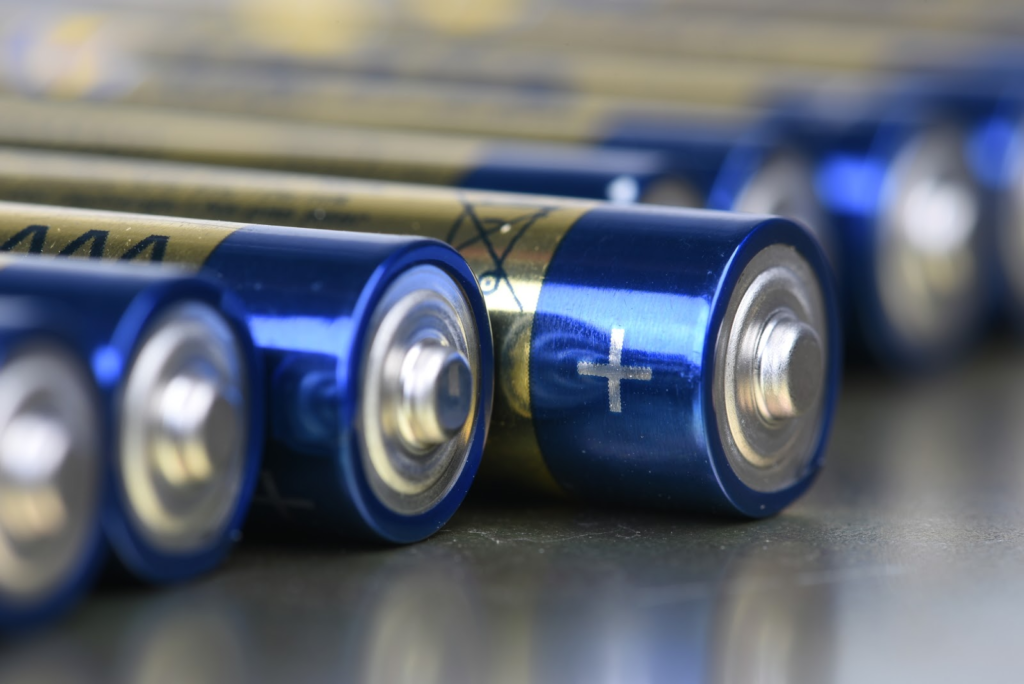
Alkaline batteries are a type of dry cell battery that uses an alkaline electrolyte.
Widely used in household appliances in general.
Its high power output makes it suitable for equipment with high power consumption.
They are also used as emergency power sources because they can be stored for long periods of time and can be expected to provide a stable supply of electricity.
However, if left unattended for a long period of time, the evaporation of the electrolyte may cause the electricity to stop flowing.
In addition, there is a risk of voltage drop in low temperature environments and a risk of rupture or leakage due to increased pressure inside the battery in high temperature environments.
manganese dry cell
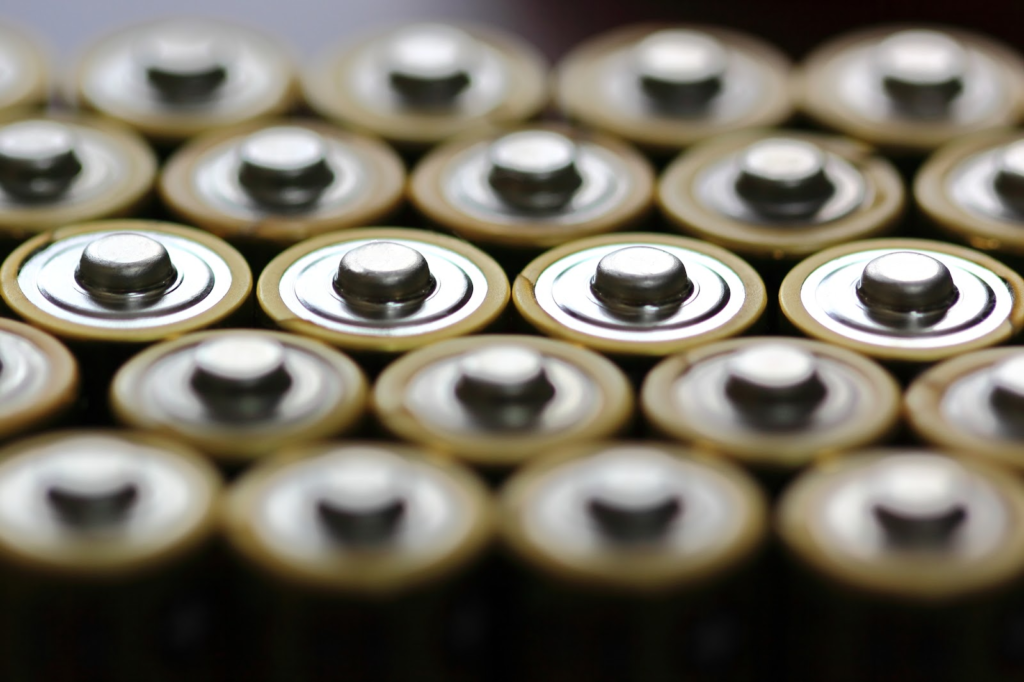
Manganese dry cell batteries use manganese oxide as the positive electrode material.
Because of their low power output and light weight, they are used in small electronic devices such as clocks, remote controls and toys.
It also has the advantage of maintaining a more stable voltage in low-temperature environments than alkaline batteries.
However, they are inferior to alkaline batteries in terms of power and battery capacity, and as the electrolyte is weakly acidic, there is a risk of injury if the battery comes into contact with leaked liquid.
silver oxide battery

Silver oxide batteries are dry cells that use silver oxide as the positive electrode material.
It is characterized by high power output and a long service life.
As a constant voltage can be maintained for a long period of time, they are used in high-precision electronic equipment such as medical devices and measuring instruments.
The main weakness is that they are expensive.
They are more expensive than other batteries due to the use of silver oxide in the cathode.
In addition, they are sensitive to the silver market and their activities are limited to high-priced products.
primary lithium battery
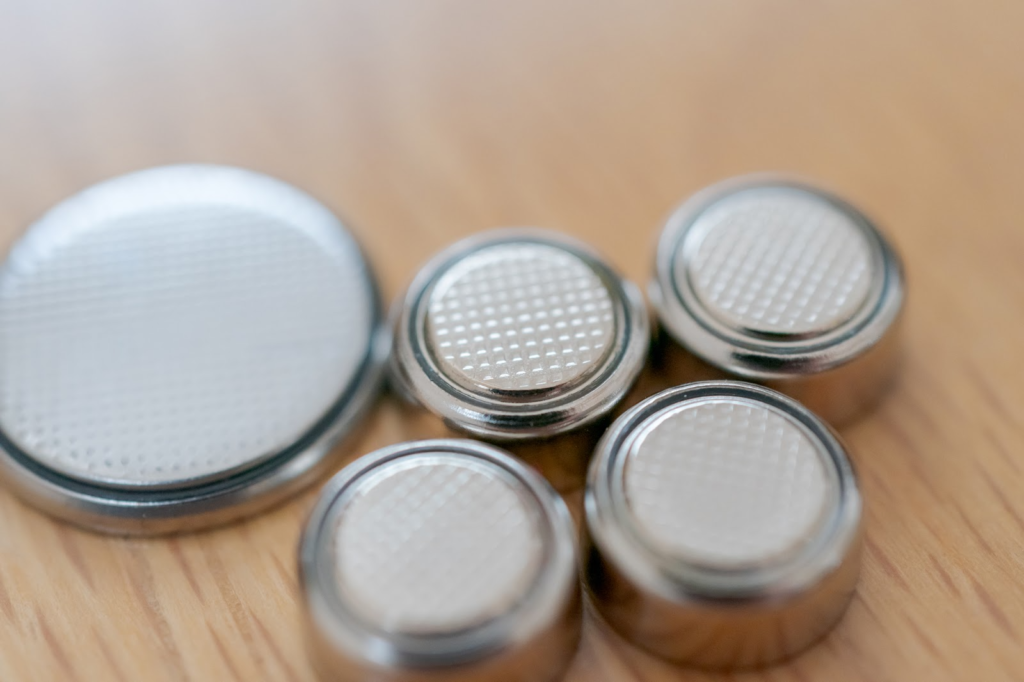
Primary lithium batteries are primary batteries that use lithium as the positive electrode.
They show stable high voltages and have low self-discharge, enabling long-term storage.
Small and lightweight, used in portable electronic devices such as mobile phones and digital cameras
The use of an organic electrolyte means that the electrolyte does not freeze even in sub-zero temperatures, which is an advantage as battery performance does not deteriorate easily in low-temperature environments.
On the other hand, the price of batteries is relatively high because lithium is used for the electrodes.
If a short circuit occurs inside the battery, there is a risk of ignition and care must be taken when handling the battery.
Finally, this section explains how to distinguish between primary (non-rechargeable) and secondary (rechargeable) batteries
Using different batteries for your purpose
In general, primary batteries have stable voltage, low self-discharge and can be stored for long periods.
It is therefore suitable for equipment requiring less power for longer periods of time and for disaster power supplies.
Examples include watches, remote controls, flashlights and radios.
On the other hand, rechargeable batteries have a high energy density and can be recharged and used again after use.
It is therefore suitable for use in equipment that frequently uses large amounts of power.
Examples of use include laptops, smartphones and power tools.
Primary and rechargeable batteries have very different characteristics.
It is necessary to take performance and cost into account before using them.
Summary
This concludes the commentary on primary batteries.
We hope this will help to answer your questions.