‘What is a palladium catalyst, after all?’ Are they around us?’
We have written this article to answer these questions.
In this article, we will give a biting explanation of palladium catalysts, followed by a simple explanation with familiar examples.
We hope that by the end of reading the article, you will have an idea of palladium catalyst.
Let’s have a look.
What is a palladium catalyst?

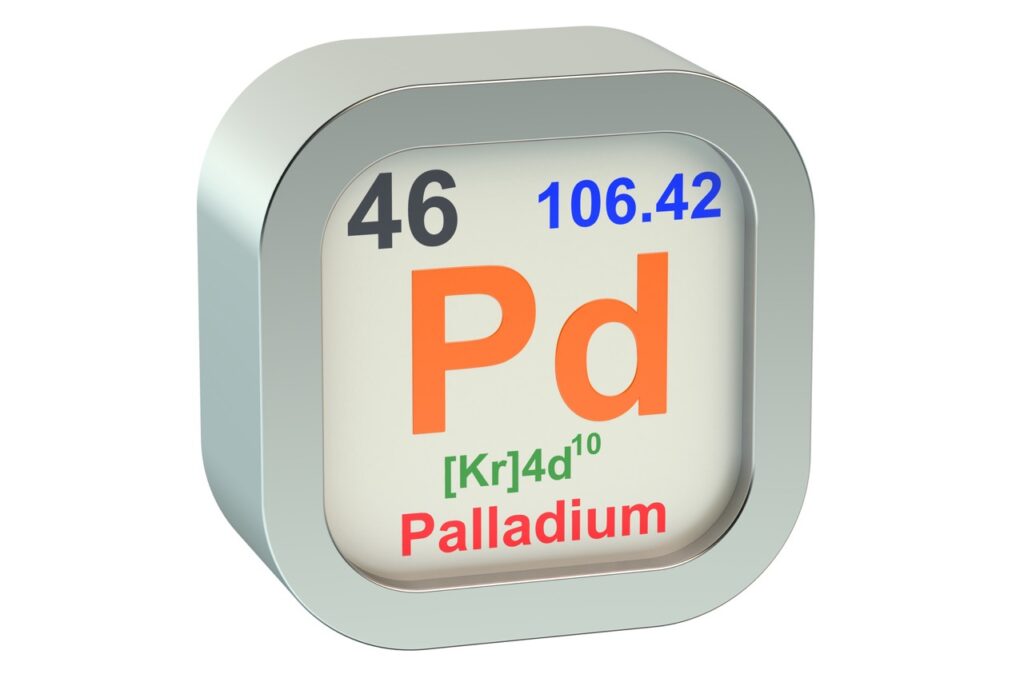
Palladium catalysts are manufactured using palladium-containing compounds as catalysts.
They are used as catalysts for hydrogenation and oxidation and are indispensable in organic synthesis.
Among other things, this method is used for ‘cross-coupling synthesis’ and is used for basic research and as an industrial manufacturing method.
Cross-coupling synthesis is the joining of two molecules into a single molecule.
Cross-coupling synthesis is a chemical reaction in which two molecules with different structures are combined to form a single molecule.
The ‘Heck reaction’, ‘Negishi coupling reaction’ and ‘Suzuki coupling reaction’ are used for palladium catalysis.
How Palladium is used in society.
Palladium catalysts are used in society for ‘gas purification in petrol cars’, ‘filters in IH grills (Panasonic)’ and ‘pharmaceuticals’.
Let’s look at each of them.
Gas purification for petrol vehicles.

Palladium has long been used in petrol-fuelled autocatalysts.
Specifically, it is included with rhodium and platinum in catalytic converters that purify toxic gases, making them non-toxic through a catalytic reaction.
- HC (hydrocarbons) → oxidation → H2O + CO2 (water and carbon dioxide)
- CO (carbon monoxide) → oxidation → CO2 (carbon dioxide)
- NOx (nitrogen oxides) → reduction → N2 + O2 (nitrogen, oxygen)
Filters for IH grills (Panasonic)

Panasonic’s IH grills, which are used for cooking, also incorporate a palladium catalyst.
Used as a filter for ‘smoke and odor removal’, the palladium catalyst combined with a platinum catalyst breaks down hydrocarbons, the main component of smoke, into water and carbon dioxide.
What it does is almost the same as gas purification in petrol-powered vehicles.
Medicines (e.g. blood pressure drugs, anti-cancer drugs)
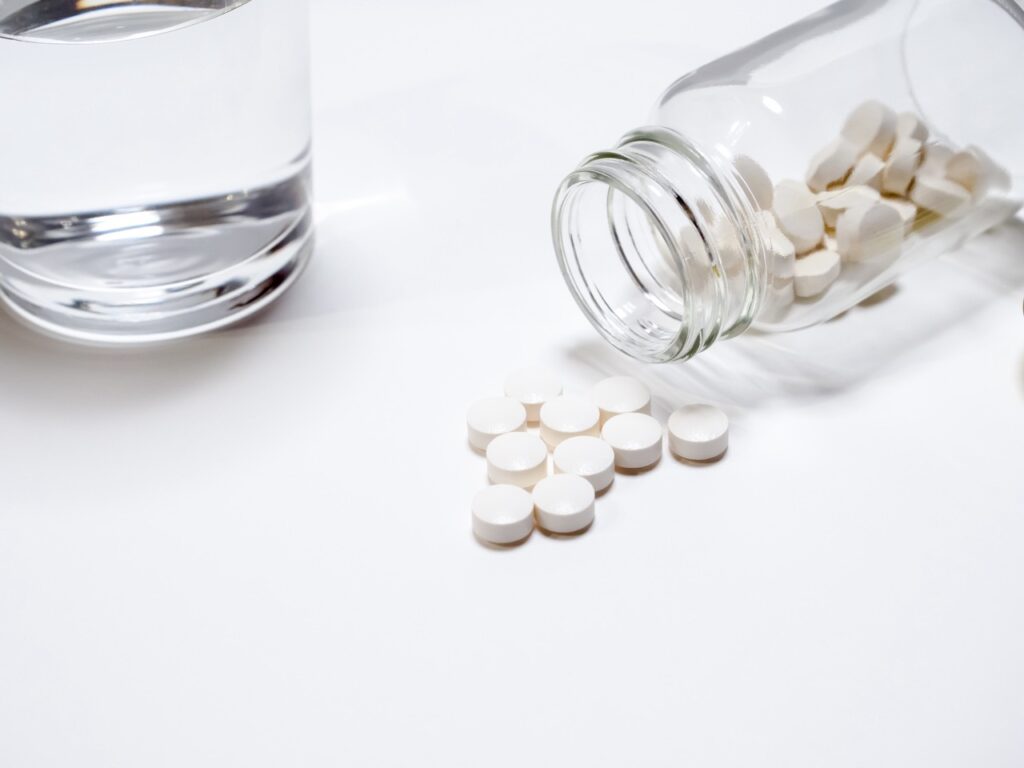
Palladium-catalyzed cross-coupling synthesis is also used in pharmaceuticals.
For example, the blood-pressure-lowering drug losartan, the anticancer drug imatinib, etc.
The elucidation of molecules and catalytic performance is also useful in these medical fields.
Column: History of palladium catalysts and automobiles

Palladium catalysts are used in petrol vehicles.
Platinum catalysts were originally used in many diesel vehicles and, in comparison, platinum catalysts offer better performance.
So why was the palladium catalyst chosen? The amount of money behind it was.
Palladium was used because it was cheaper than platinum at the time, and its performance was sufficient for petrol-powered vehicles.
However, the price of palladium, which was cheap at the time, rose sharply due to increased demand for petrol-powered vehicles.
As of 2023, it has become more expensive than platinum and gold.
As a result, many petrol vehicles now contain platinum catalysts, and catalytic converters containing rhodium, platinum and palladium are often used.
Autocatalysts are also explained in the following article, which may be of interest to you.

Summary
In this article, we explained the palladium catalyst.
Let’s look back at the key points.
The key points of this article are following.
- Palladium catalysts are used for hydrogenation, oxidation and other catalytic applications, particularly in organic synthesis
- In society, it is used for ‘gas purification in petrol-powered vehicles’, ‘filters for IH grills’, ‘pharmaceuticals’, etc.
- Prices are currently rising.
Other catalysts can be found in the following articles.