‘I hear about catalysts sometimes, but I don’t know what they’re actually used for.’
Catalysts are often heard of in chemistry classes.
The role is simple, although it can be somewhat complicated when presented with chemical formulae.
In this article, we will explain catalysts in an easy-to-understand way and then introduce some familiar examples of their use.
Catalysts are used in familiar places such as petrol-powered cars and refrigerators, so let’s take a look at the world of chemistry together.
Catalysts are substances that aid chemical reactions.

A catalyst is a substance that alters the rate of reaction of a particular chemical reaction.
The use of catalysts for reactants can lower the activation energy.
In simple terms, a catalyst is a substance that helps to make a chemical reaction happen.
There are two types of catalyst
Let’s look at each of them.
Homogeneous catalysts (ions in aqueous solution)
The catalyst is homogeneously mixed in the reactants, making it easy to control the reaction.
The catalyst is mixed in with the solution, which makes it difficult to remove the catalyst from the products after the reaction.
The most common use scenario for this catalyst is in organic synthesis reactions.
Heterogeneous catalyst (solid)
Heterogeneous catalyst is also mixed with the reactants, but are characterized by their solid nature, which makes them easy to separate.
Easy separation means that they can be reused immediately.
It is a useful catalyst in the field.
One disadvaantage is that it is difficult to control the response.
Heterogeneous catalyst is used in the purification of vehicle exhaust gases and in oil production processes.
How catalyst is used in society.
Catalyst is used in society in the form of ‘platinum catalysts’, ‘photocatalysts’ and ‘automotive catalysts’.
Here are some examples of actual use.
You will find that they are surprisingly familiar.
Use in automobiles (purification of exhaust gases).
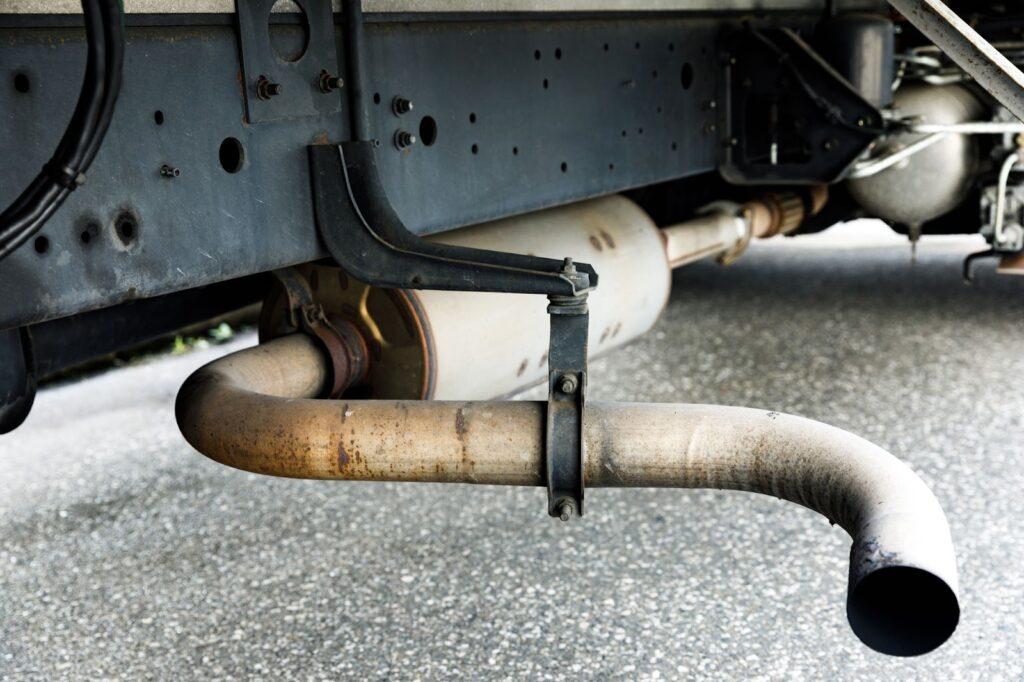
In petrol vehicles, catalyst is used to purify exhaust gases, known as automotive catalysts (three-way catalysts).
This method uses a catalytic reaction to purify toxic gases contained in exhaust gases, and the specific process is as follows.
- HC (hydrocarbons) → oxidation → H2O + CO2 (water and carbon dioxide)
- CO (carbon monoxide) → oxidation → CO2 (carbon dioxide)
- NOx (nitrogen oxides) → reduction → N2 + O2 (nitrogen, oxygen)
Platinum, palladium and rhodium catalysts are used in these processes.
For more detailed information, see the following article, which also explains the details.

Photocatalytic air purifiers
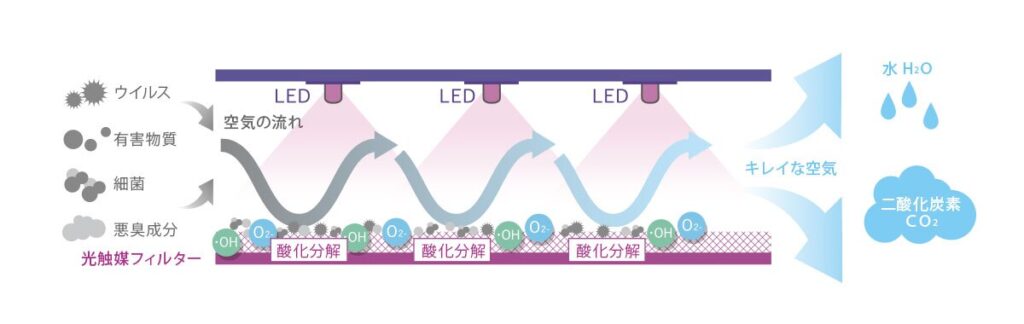
Source:光触媒 除菌・脱臭機「ターンド・ケイ」【NECフィールディング】
Some air purifiers use photocatalyst.
Air purifiers with ‘photocatalytic filters’ break down harmful substances and odour components in a chemical reaction and expel them as clean air.
Photocatalytic air purifiers have gradually become more popular in recent years, with their use in shopping malls, sports centers and inns.
The process of making plastic bags

Catalysts are also used in the production of polyethylene bags (commonly known as plastic bags used at the supermarket).
Naphtha, which is produced by heating crude oil, is thermally decomposed to extract ethylene, which is mixed with a catalyst and chemically reacted at high temperatures and pressures to produce polyethylene.
Plastics and polymers are explained in the following article for those interested.
Refrigerator (high freshness storage)
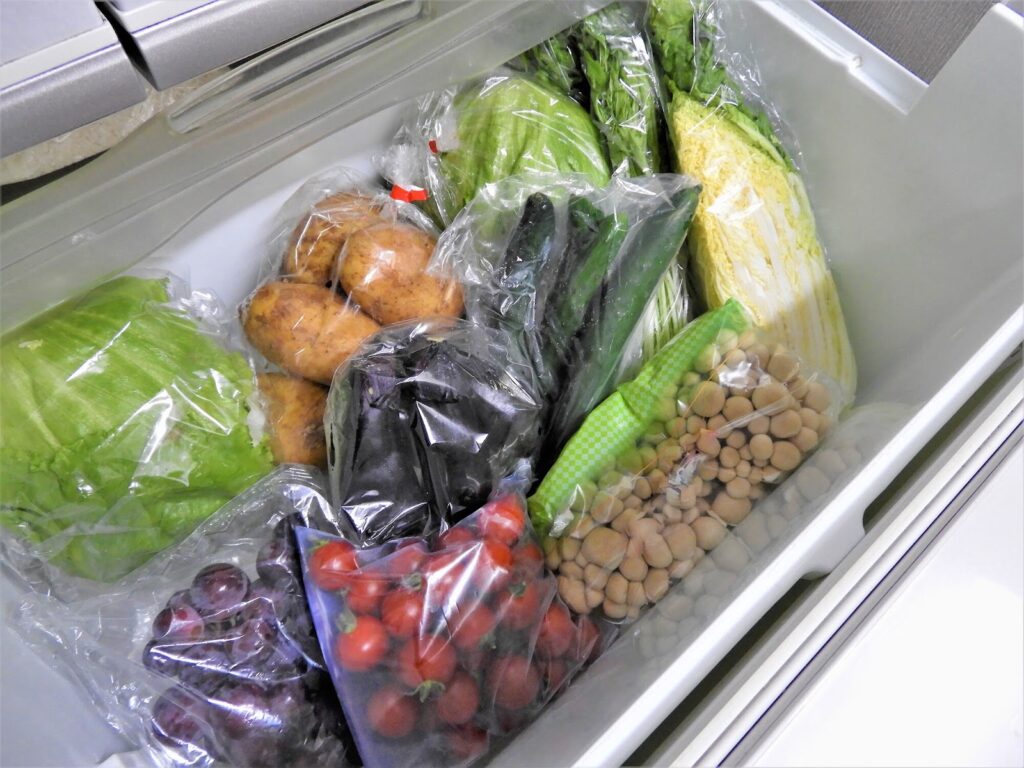
Catalysts are also used in some fridges (e.g. those made by Hitachi).
Previously, photocatalysts were used, but now platinum catalysts are used to break down ethylene gas and odour components into carbon dioxide gas and molecules, allowing vegetables to be put to sleep.
This high freshness preservation locks in moisture and prevents drying, which means that even vegetables that have been stored for a long time can still taste good.
See the following article for an explanation of platinum catalysts.

Summary
In this article, we explained the ‘catalyst’.Finally, let’s look back at the key points.
- The key points of this article.
- Catalysts are substances that aid chemical reactions.
- There are two types of catalysts: homogeneous and heterogeneous catalysts.
Catalysts are used in the ‘purification of petrol vehicle exhaust’, ‘in the process of making plastic bags’ and ‘in some refrigerators’.
References
触媒とはなに?触媒についてまとめて解説
触媒 高校化学 均一系触媒 不均一系触媒 エンジョイケミストリー 123202
業界初! “プラチナ触媒”で食品の鮮度を保つ冷凍冷蔵庫「新 真空チルド」とは? – 価格.comマガジン
ポリエチレンとは? | 日進化学株式会社